


11/12/2025
Identification of Innovations During Farmer Selection and Baseline Survey in Embu Living Lab, Kenya
Introduction
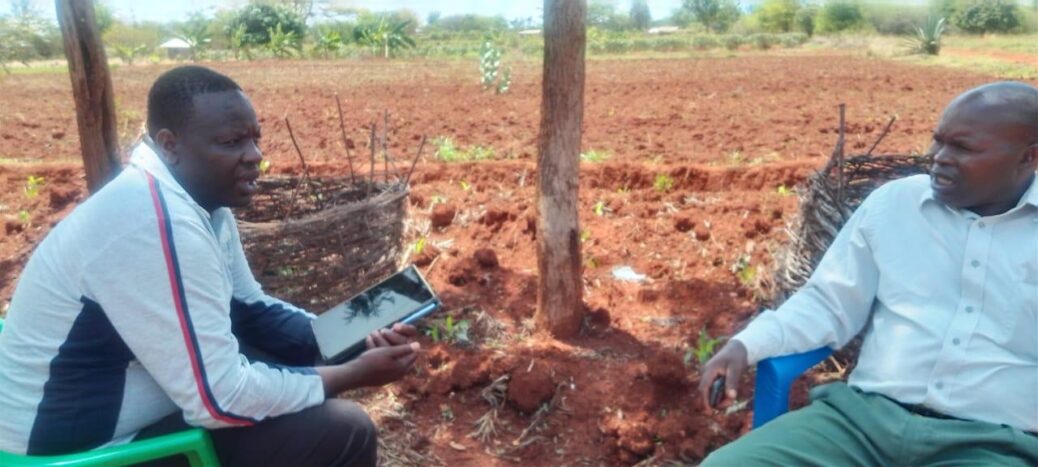
As part of the GALILEO project, a comprehensive baseline survey and farmer selection process was conducted across the Embu sub-living labs. The initiative aimed not only to identify participants for the project but also to discover and document locally developed agricultural innovations that are enhancing resilience, productivity, and sustainability in the region.
Key Innovations Identified
1. Integrated Pest Management (IPM) in Avocado Production
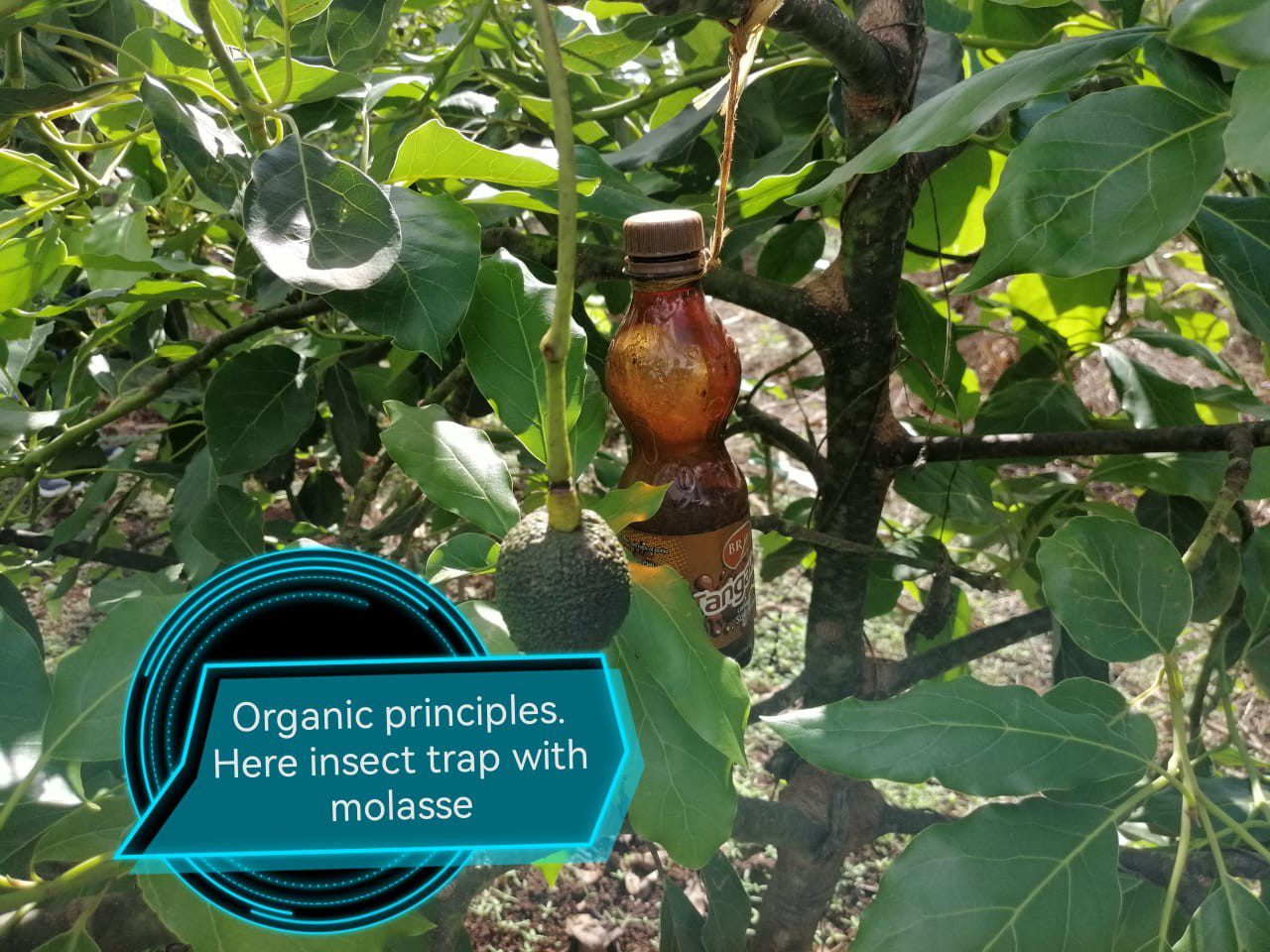
Organic method of controlling pests in fruit trees. In this innovation the farmer is using molasses processed from the sugarcane to control Wasp and mosquitos from Avocado trees. The quality of the fruit produced fetches better prices in the market because there are no chemical residues and no physical damage by pest. Additionally, the farmer has greatly reduced the cost of production because of no use of synthetic pesticides.
2. Recycling of waste water from aquaculture for crop production and agroforestry tree planting
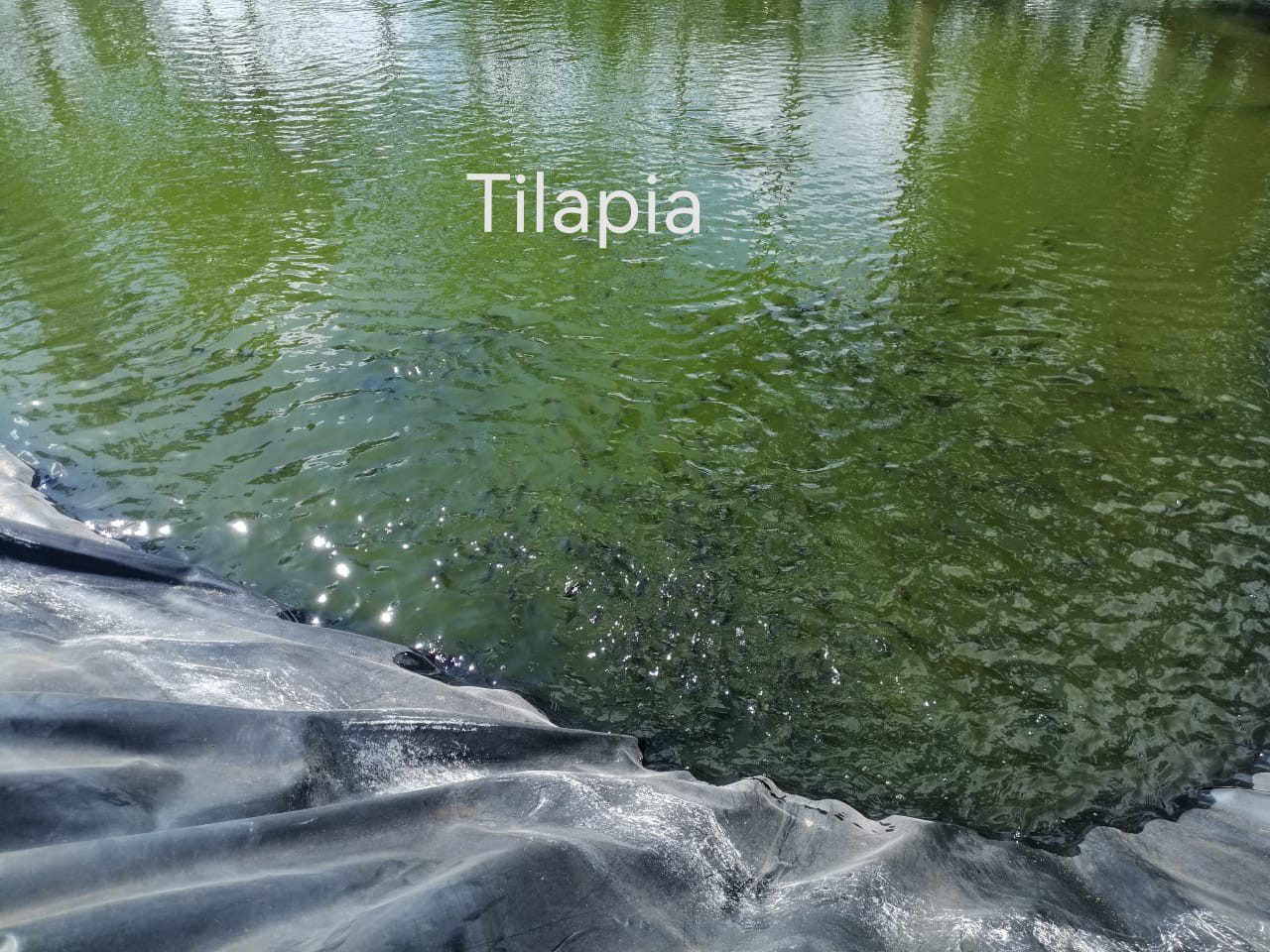
Besides the farmer producing fish in his farm, the waste water from the fish pond is recycled and used for domestic purposes and irrigation. The water recycled is used to grow both crops, fruits and indigenous trees in the farm. Our living lab is in arid and semiarid areas, therefore prudence and judicious use of scarce water is key. The farmer demonstrates how the waste water can be put into other uses.
3. Agroforestry trees used as windbreak
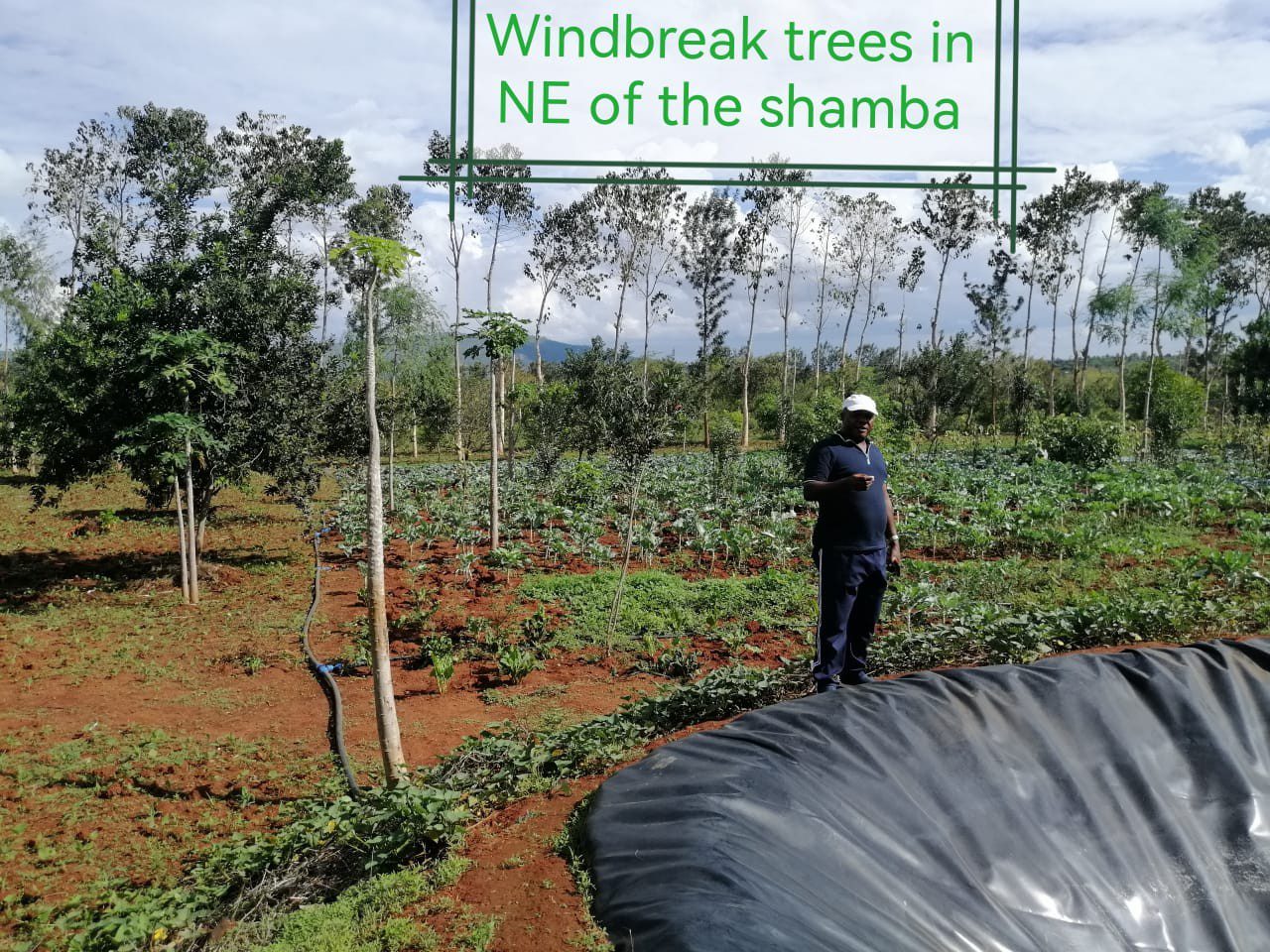
The agroforestry trees used as windbreaks in this farm has solved the following:
-
The rate of evapotranspiration is reduced therefore there is maximum production of the crops and trees.
-
The rate of dust from the neighboring farms and roads does not find its way in the farm and therefore the respiratory diseases associated with dust are reduced.
-
The incidences of structures being damaged by wind is greatly reduced
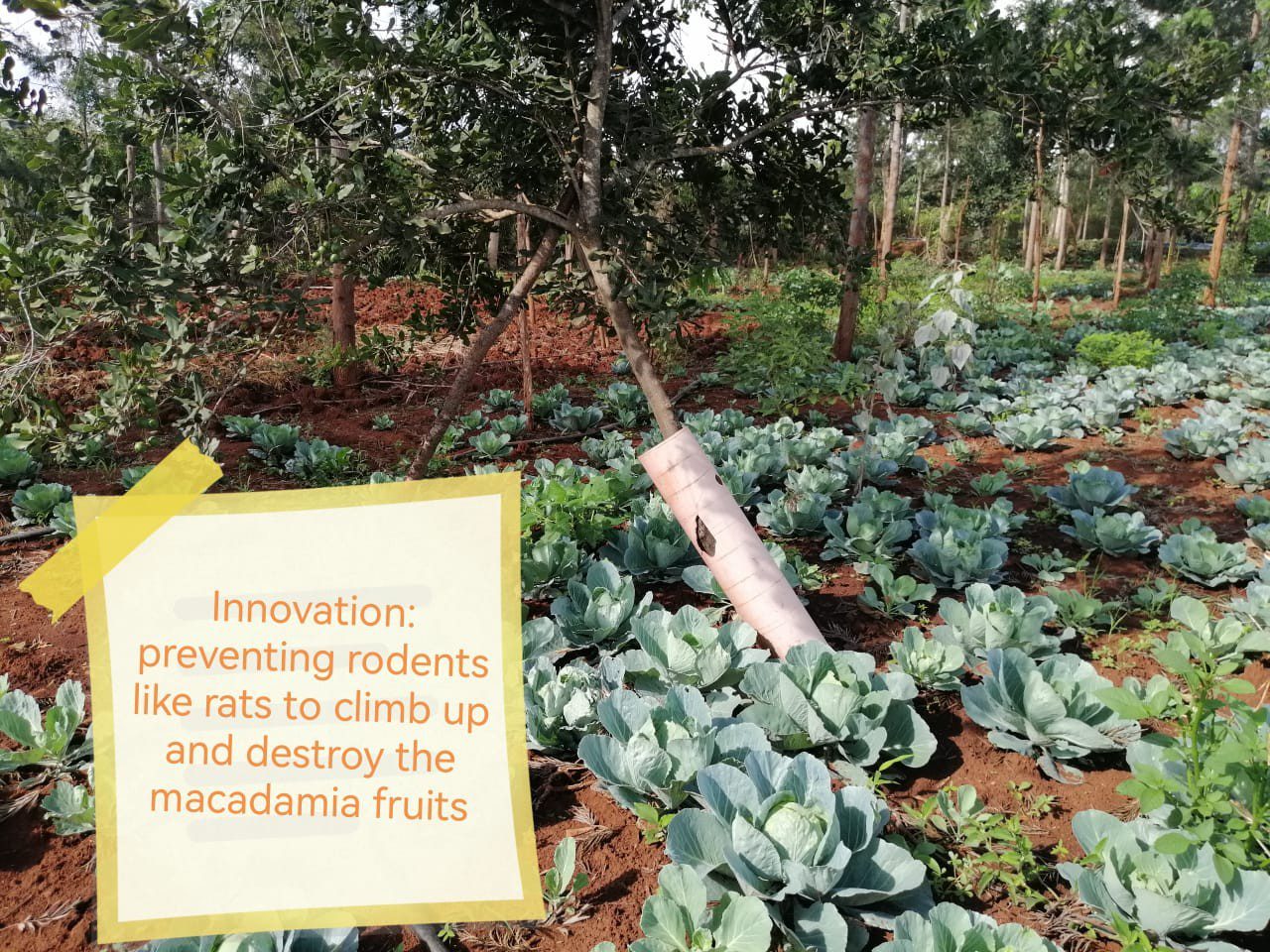
4. Innovation on preventing rodents from attacking the crops and agroforestry trees
This concept and innovation applied in the farm has greatly solved the problem of macadamia nuts from being attacked by rodents such as squirrels and mole rats. Due to this intervention the farmer is guaranteed maximum production from macadamia trees and therefore fetching more income as compared to other farms where the rodents have not been controlled.
5. Innovation on Planting of resistant variety of crops
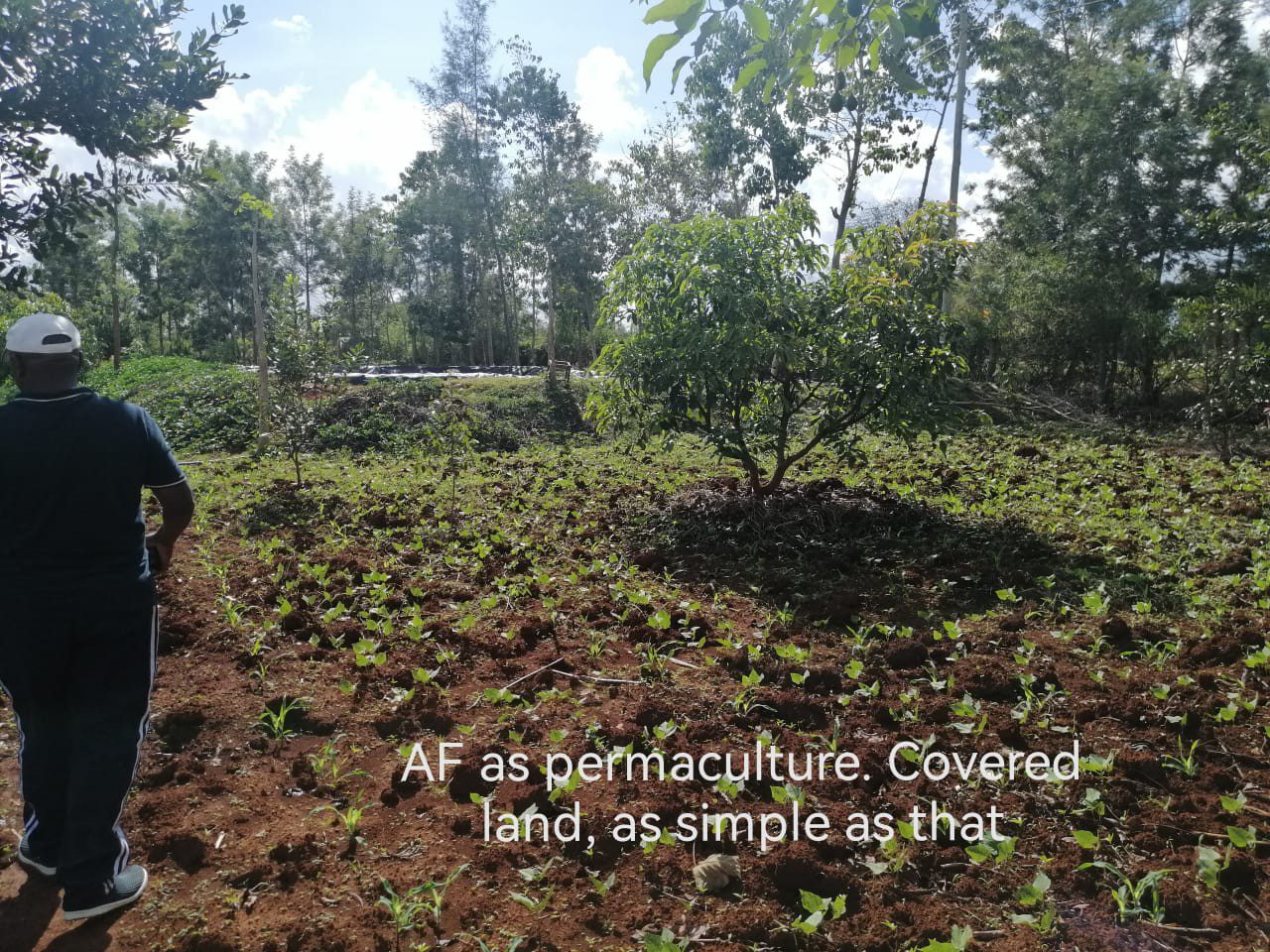
Food insecurity is threat to the local community in Embu LL. Through trainings the farmer has adopted production of drought resistant varieties of food crops. This combined with irrigation water has guaranteed him continuous production all the year round hence the household being food secure.
6. Innovation on grafting and top working on fruit and nut trees
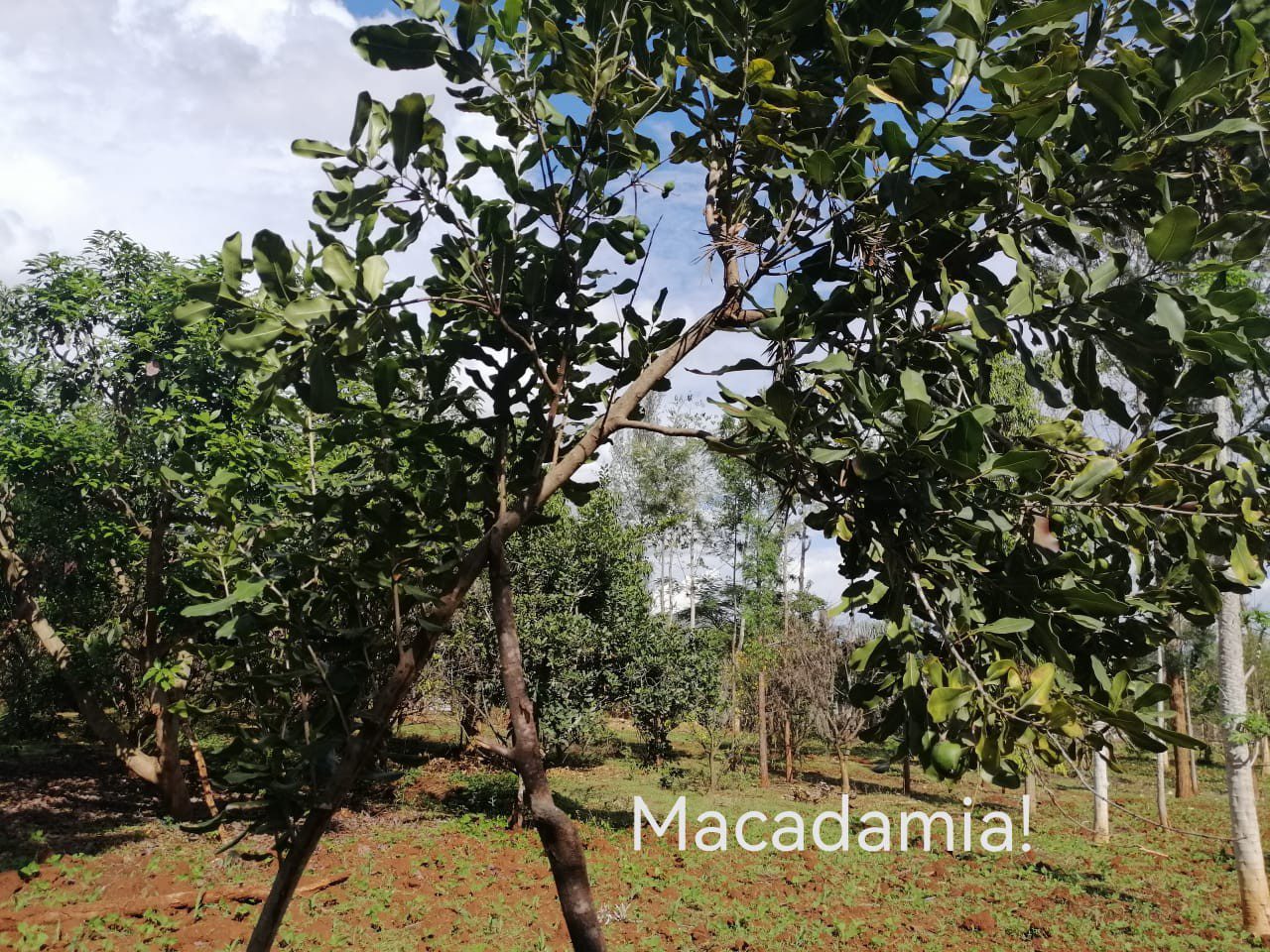
The technology of grafting nut crops and fruit trees from the existing indigenous species has solved the following challenges in the farm:
-
There is increased production of nut and fruit trees because the scions are carefully selected from superior producing crops.
-
The incidences of young tree drying after planting is highly reduced because the farmer is taking advantage of well-established indigenous trees as root stocks.
-
The major challenge of termite attacking seedlings after planting is reduced.
7. Innovation on diversification of fruit tree production
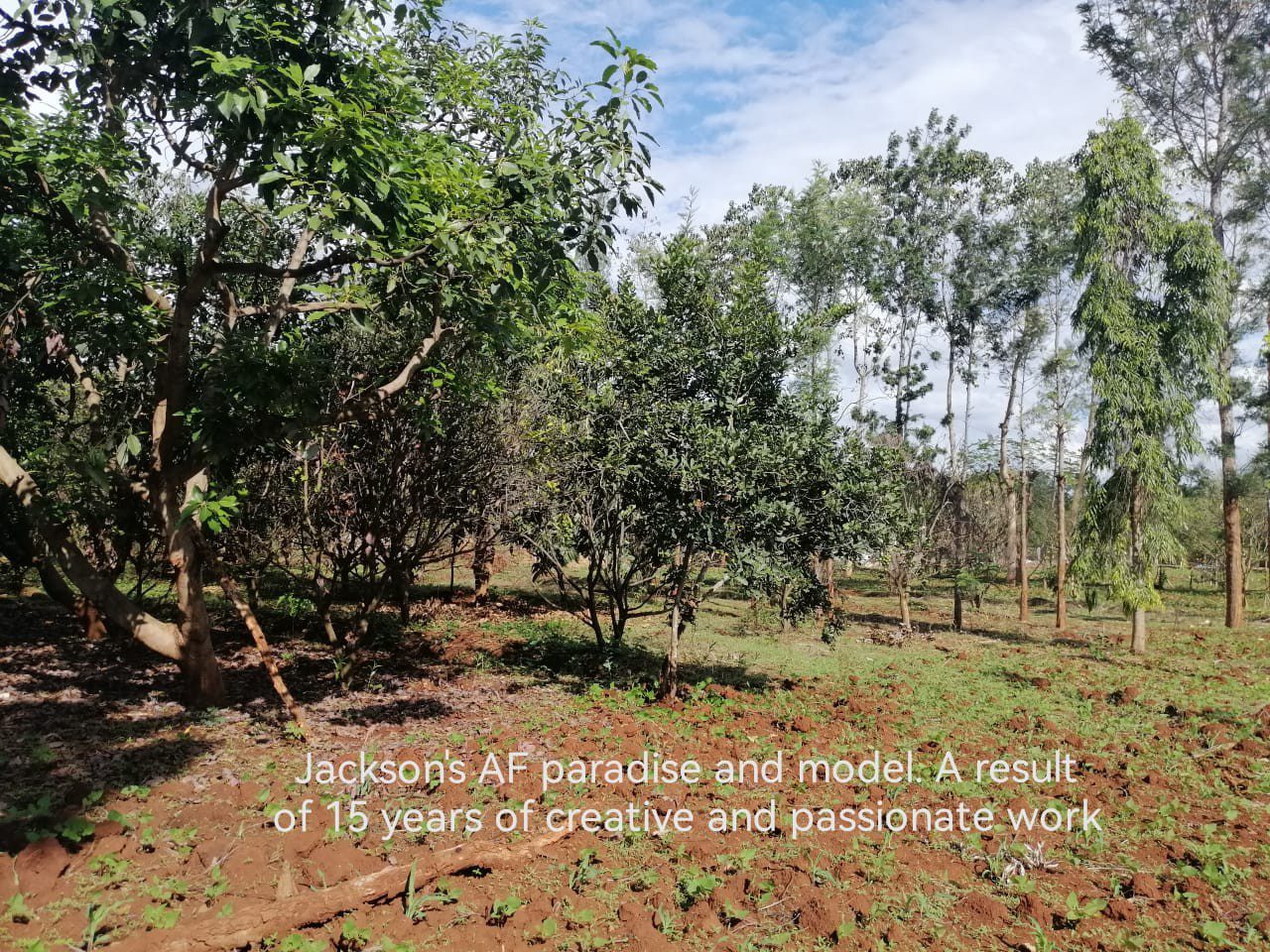
The farmer has diversified on fruit tree production. The varieties of the fruit trees in the farm include: Macadamia, Avocado, Citrus, Pawpaw, Cashew nuts. The extracts from the pawpaw leafs are greatly used in this farm to control aphids and scales which are the major pests that attack and destroy agroforestry fruit trees. Due to diversification of fruit trees the farmer is guaranteed continuously production hence generation of income from agroforestry all the year round.
8. Innovation on temperate fruit tree production in tropical zones
Apple fruit production mostly is done in temperate areas. The farmer has grafted apple scions on loquats fruit trees as root stock. The compatibility is excellent and the loquats being indigenous in the living lab, the incidences of attack by termites and white ants is greatly reduced.
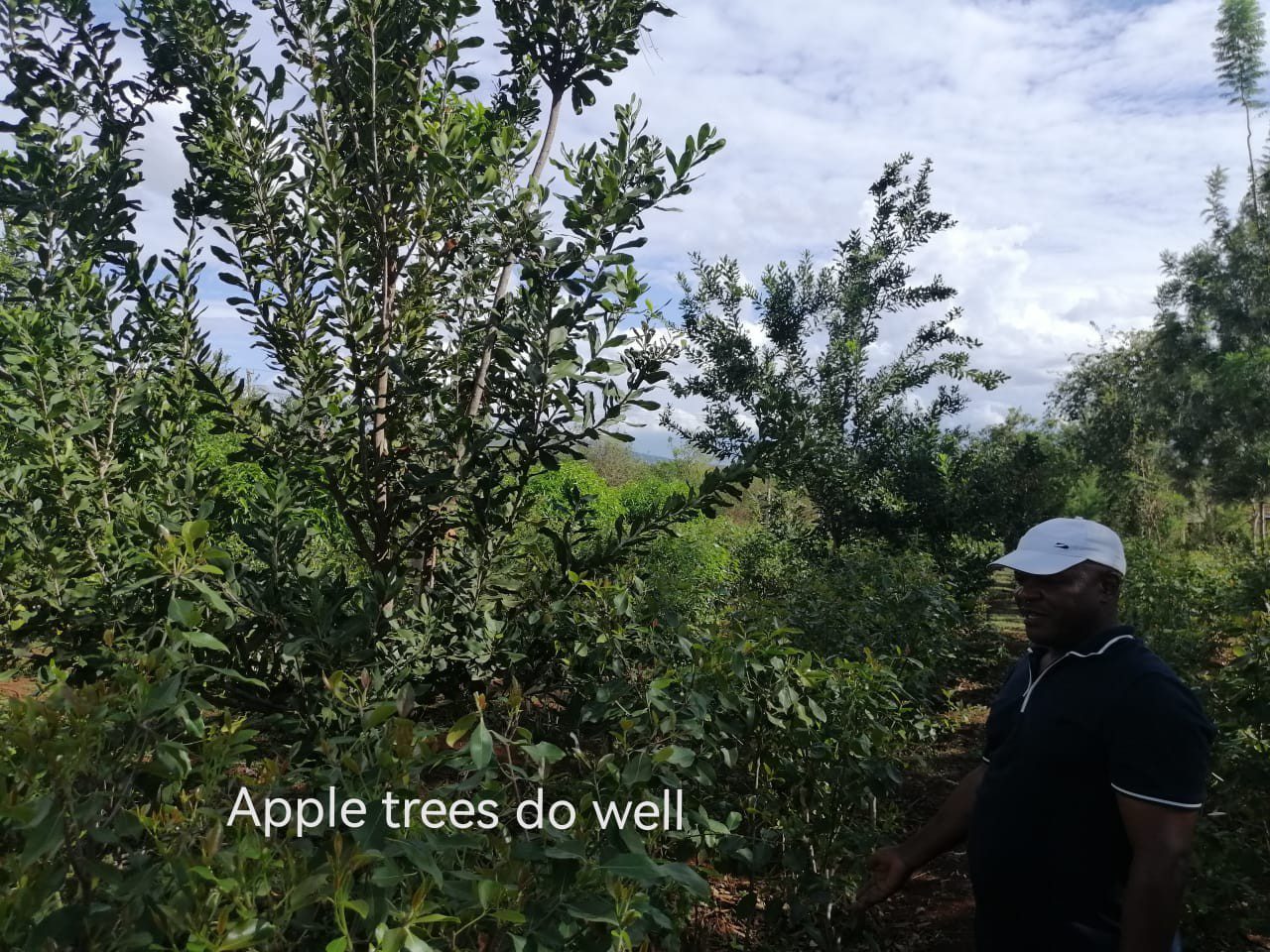
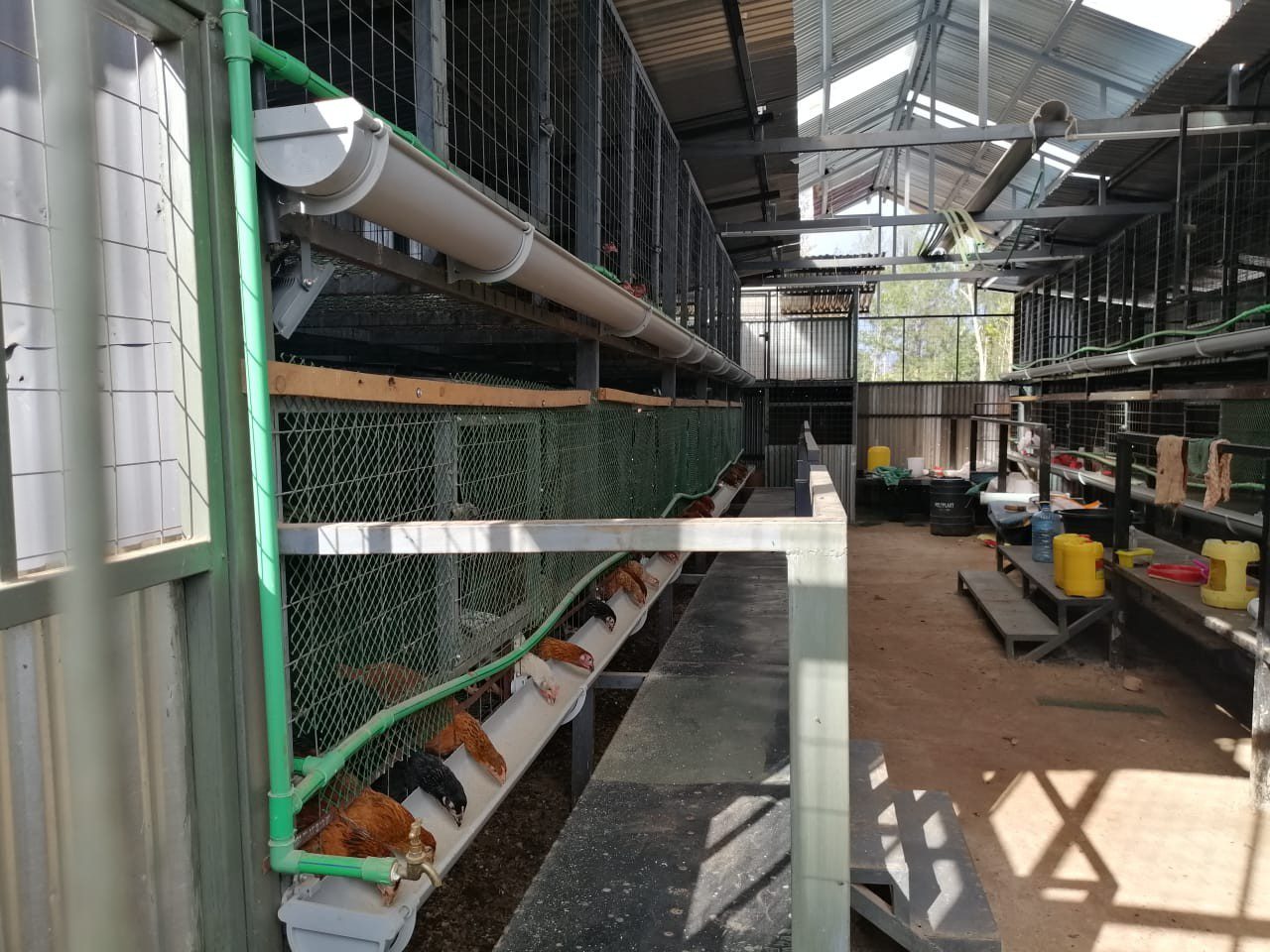
9. Innovation on use of farm manure in crop and tree production
High level of poultry production by battery cage system as compared to conventional free range system has led to more production of manure that is used to improve soil health and fertility hence improving on crop and tree production in the farm. The use of artificial fertilizers is greatly reduced therefore the profit margin in the farm is increased.
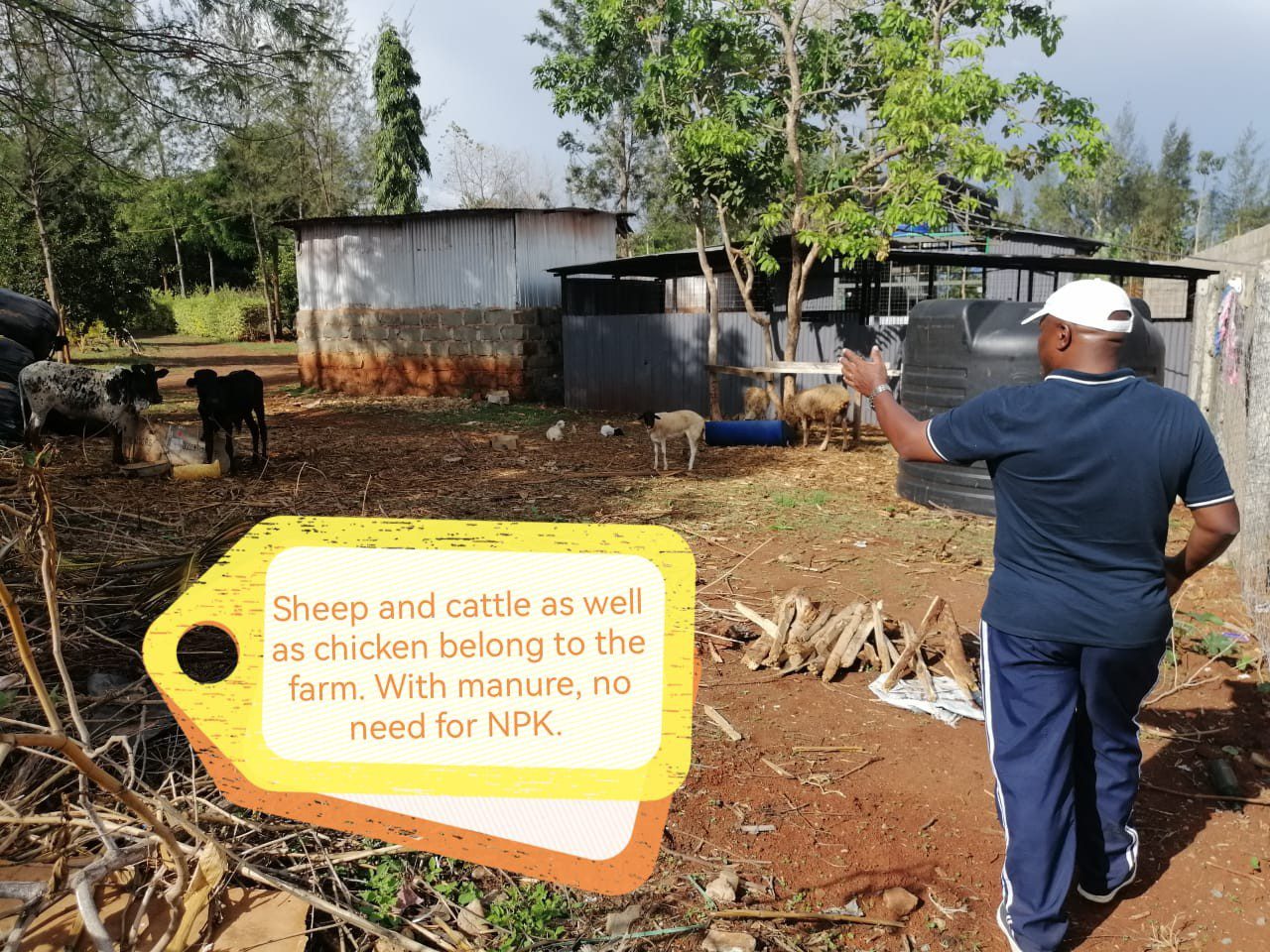
10. Innovation on use of Composting and farm yard manure
High level of compost and farm yard manure production by livestock semi-zero grazing system as compared to conventional free range system has led to more production of manure that is used to improve soil health and fertility hence improving on crop and tree production in the farm. The use of artificial fertilizers is greatly reduced therefore the profit margin in the farm is increased.
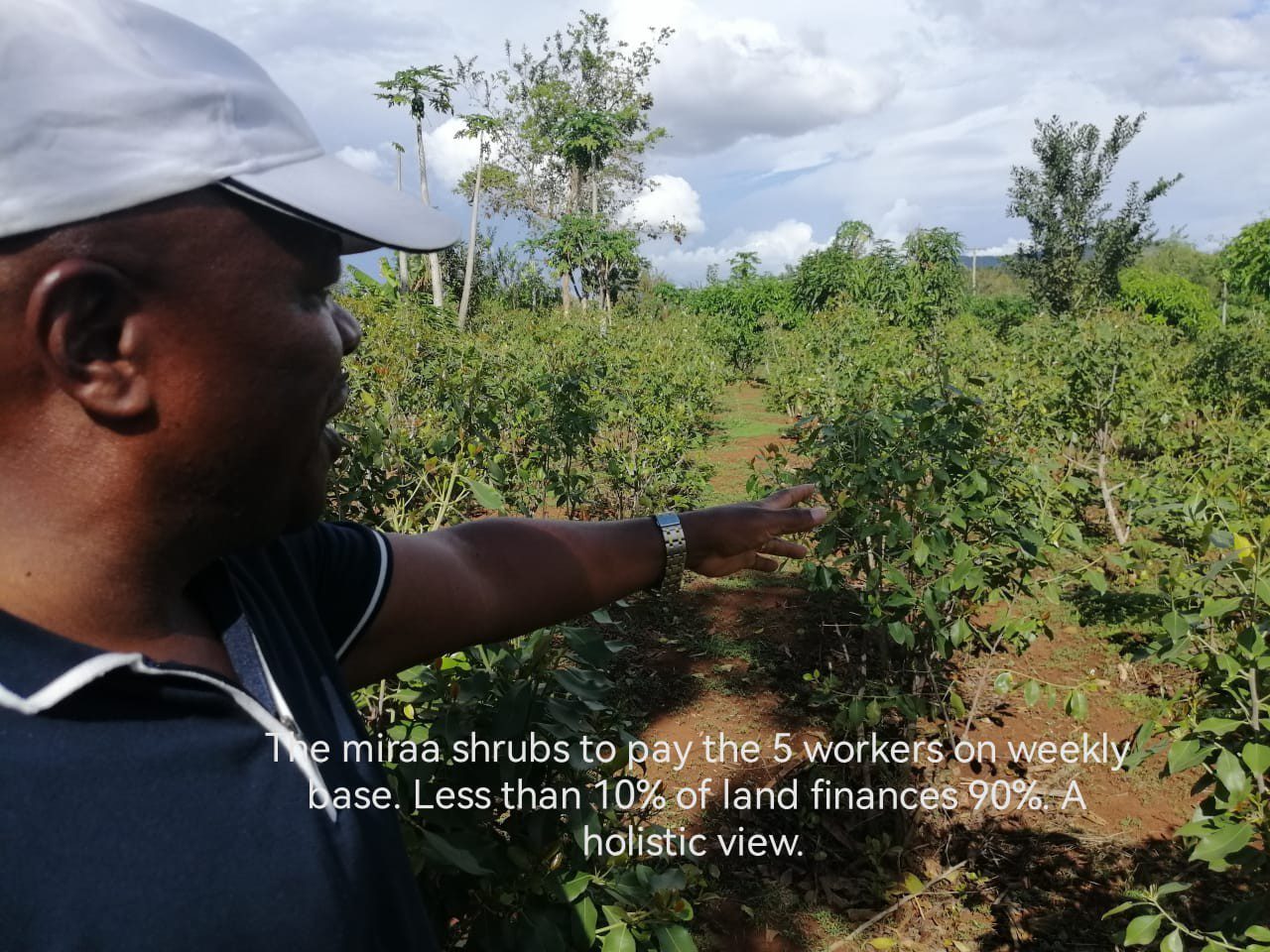
11. Innovation on use of Pawpaw (Carica papaya) leaf extract to control aphids and scales in production of Catha edulis
The use of Pawpaw leaf extract in the “khat” (Catha edulis) in controlling aphids and scales in this cash crop is in high level. This cultural and organic method in pest control has led to high quality khat in the market because there is no threat of diseases associated with the synthetic pesticides. Economically the money generated from this cash crop is more than enough to pay five workers on weekly basis in other farm enterprises.
12. Innovation on improvement of biodiversity
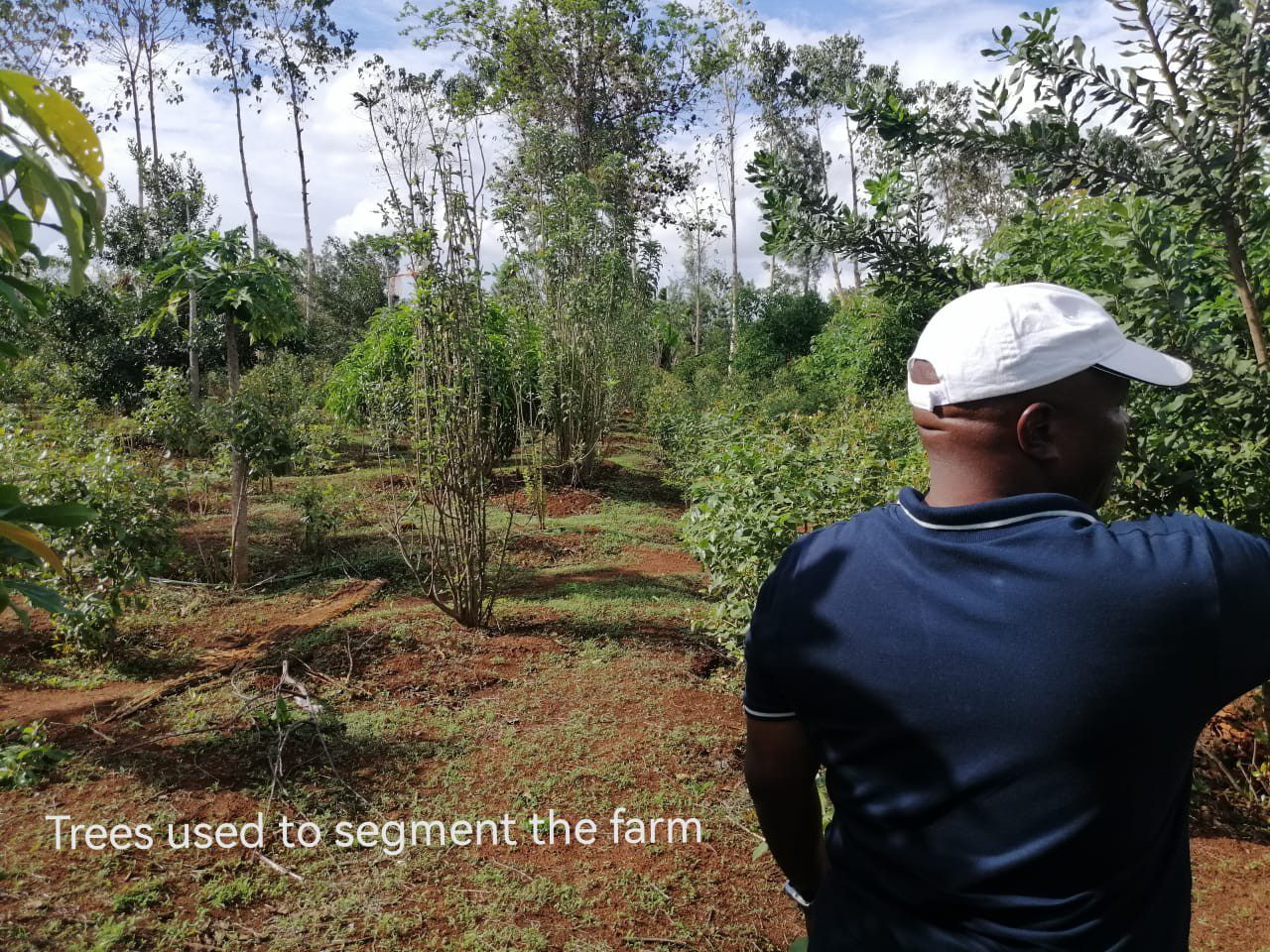
The farmer has diversified on both indigenous and fruit trees, the bee hives in his farm are well inhabited by bees which are the major pollinators of his fruit trees. Some trees are also habitat to various animals and birds. Due to high level of mulch in his farm the soil micro-organisms are prevalent. This has also created a micro-climate in the household.
13. Innovation on drilling of borehole to supply irrigation water in the farm and the neighboring homestead
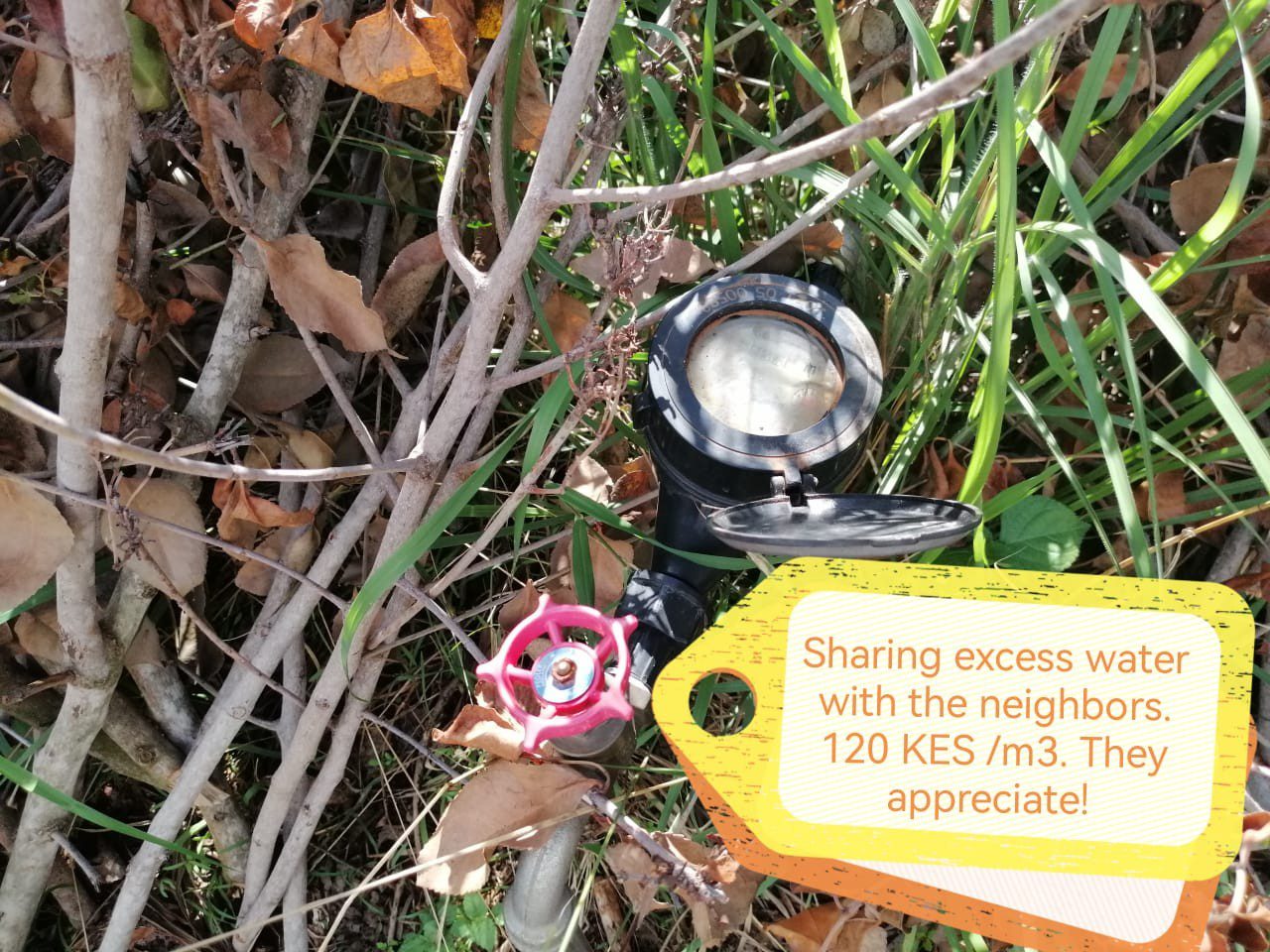
Water challenges is the biggest threat to humanity in our living lab in Embu. With this innovation the farmer has been able to practice agroforestry in his farm with a story of success for 15 years. Additionally, the farmer is able to share excess water to the neighbors at a cost of Ksh 120 / m3. With clear view of his farm, it’s a testament that with provision of water in Embu LL the agroforestry will be very successful.
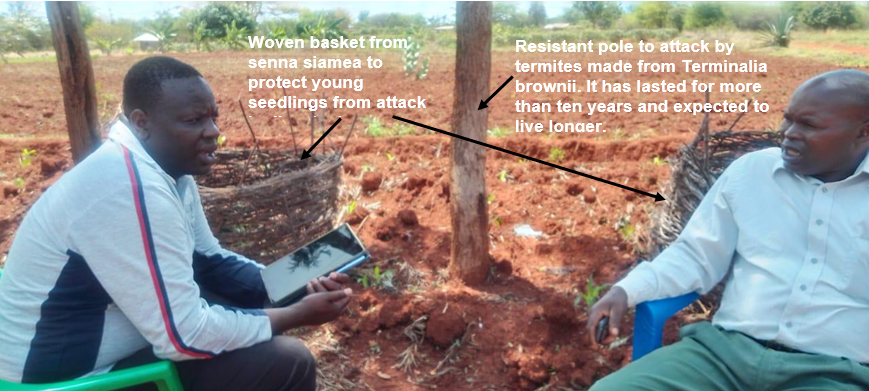
14. Innovation on use of Terminalia brownii and Senna siamea on construction due to their resistant to white ants and termites and Construction of protective structures for seedlings to prevent them from attack by livestock in the farm
Resistant pole to attack by termites made from Terminalia brownii. It has lasted for more than ten years and expected to live longer. Woven basket from senna siamea to protect young seedlings from attack by livestock.
All project activities will be published on the project’s social media accounts. Stay tuned!