

Newletter Issue #3
Welcome to the GALILEO project 3rd newsletter!
GALILEO 3rd project meeting: advancing field learning and collaboration
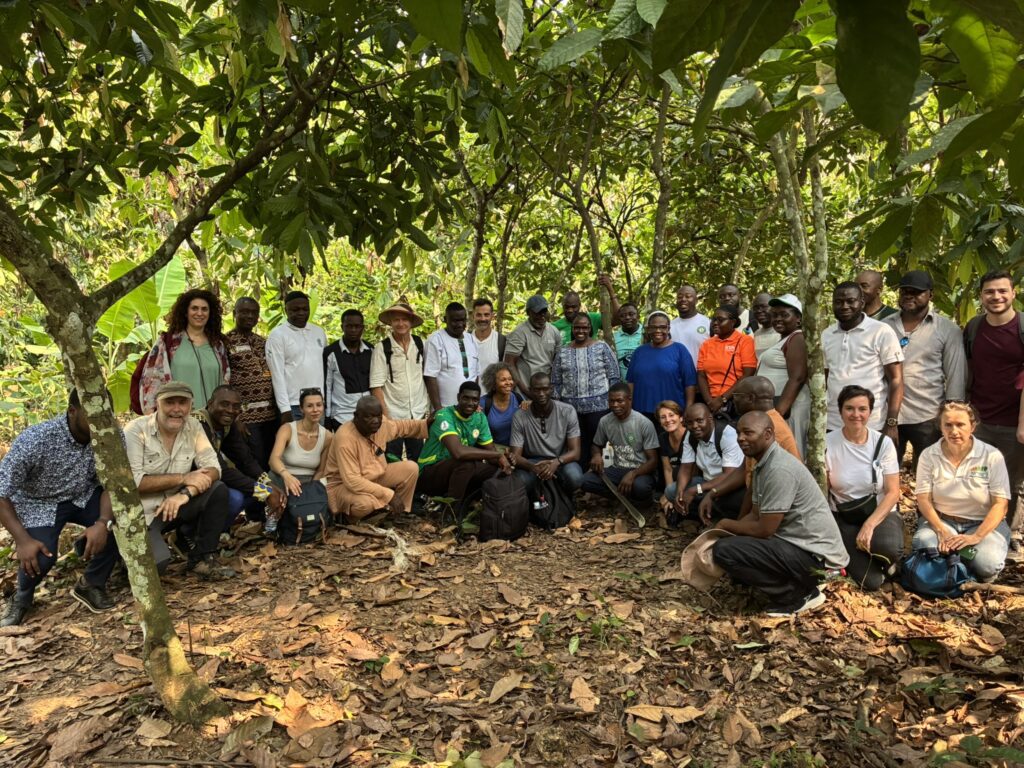
The 3rd GALILEO Project Meeting took place from 27 to 29 January 2026 in Accra, Ghana, hosted by the International Institute of Tropical Agriculture (IITA) and the University of Ghana (UG). Partners from Africa and Europe reviewed progress, strengthened coordination and prepared the next phase of work towards resilient and inclusive agroforestry systems in Sub Saharan Africa.
The meeting began with field visits to the Oheneba cocoa farms, the GALILEO Living Lab in Aponoapono Suhum and the facilities of our partner Kuapa Kokoo Limited (KKFU). These visits enabled partners to explore cocoa agroforestry practices, engage directly with farmers and learn more about cocoa aggregation, quality control and traceability.
During the following two days, partners shared updates from the Living Labs in Senegal, Kenya, Ghana and Cameroon with discussions focusing on stakeholder engagement and farmer selection processes, field trials, the baseline socio-economic surveys and environmental assessment. The meeting also featured presentations from GALILEO PhD students and concluded with clear priorities for advancing field implementation, data collection and collaboration across the consortium.
GALILEO 4th project meeting: connecting science, farmers and Living Labs
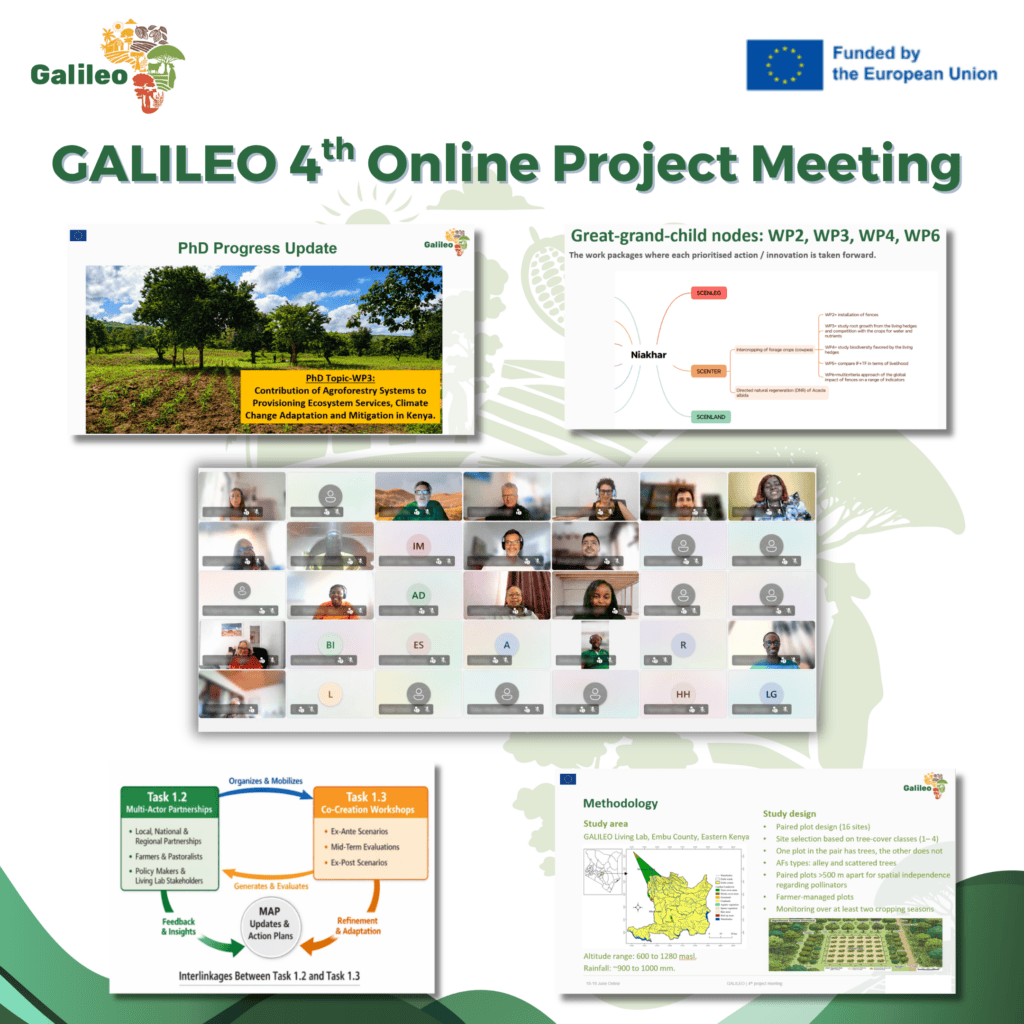
The 4th GALILEO Project Meeting took place online on 18 and 19 June 2026, bringing together partners from Africa and Europe to review progress and coordinate the next phase of activities. Discussions covered developments across the Living Labs in Senegal, Kenya, Ghana and Cameroon, including farmer engagement, local partnerships, field experimentation and knowledge sharing.
Particular attention was given to the transition from planning to implementation. Partners aligned the development of Farmer Field Schools and upcoming field activities with the collection of agronomic, environmental and socioeconomic data. Discussions also addressed climate resilience, biodiversity, ecosystem services, sustainable livelihoods, carbon farming and the assessment of agroforestry systems.
The meeting included exchanges on ethical aspects, responsible data management, communication and exploitation, as well as presentations from GALILEO PhD students. It concluded with clear priorities for advancing farmer centred experimentation, strengthening coordination across countries and preparing the next project meeting in Kenya in early 2027.
The Sahelian Bocage School: training the next generation against desertification
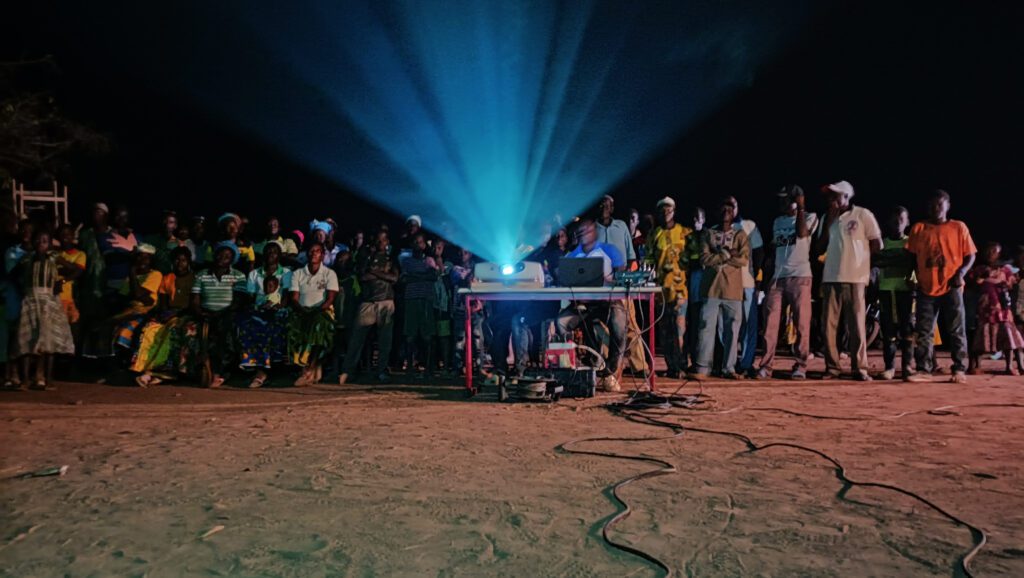
Developed within the framework of the GALILEO project, Ciné Yam’s latest documentary presents the Ecole du Bocage in Burkina Faso. Established by AZN and GALILEO partner TERRE VERTE (TEVE), the training centre prepares young women and men to implement the Sahelian Bocage model and contribute to the fight against soil degradation and desertification.
Filmed over two years, the documentary shares the experiences of apprentices, graduates and trainers through Ciné Yam’s lively storytelling approach. Available in French, Mooré and English, the film supports student recruitment, raises awareness among rural communities and promotes agroecological practices. It also contributes to Ciné Yam’s growing royalty free film catalogue, shared online and through travelling Ciné Villages screenings.
Spotlight on African Living Labs
GALILEO joined its sister projects AfroGrow and TRANS SAHARA in the IUFRO FORLIVS webinar “Spotlight on African Living Labs”. The projects presented how Living Labs can support sustainable agroforestry, climate adaptation and stakeholder driven innovation across Africa.
The discussion highlighted practical experiences, shared challenges and opportunities for strengthening climate resilience through collaboration with farmers, researchers and local stakeholders. The full webinar recording remains available online (see below).
Advancing climate resilient agroforestry through long term research and multi actor approaches
On 19 February 2026, GALILEO Coordinator Olivier Roupsard from CIRAD joined the Expert Talks webinar series organised by our sister project TRANS SAHARA. He explained how decades of agroforestry research and field monitoring are helping shape GALILEO’s work across Sub Saharan Africa.
The discussion focused on GALILEO’s approach to bringing together farmers, researchers, policymakers and practitioners through Living Labs in Senegal, Kenya, Ghana and Cameroon. By co developing locally adapted agroforestry innovations, the project aims to strengthen climate resilience, sustainable land management and rural livelihoods.
Assessing progress of GALILEO Farmer Field Schools in Cameroon
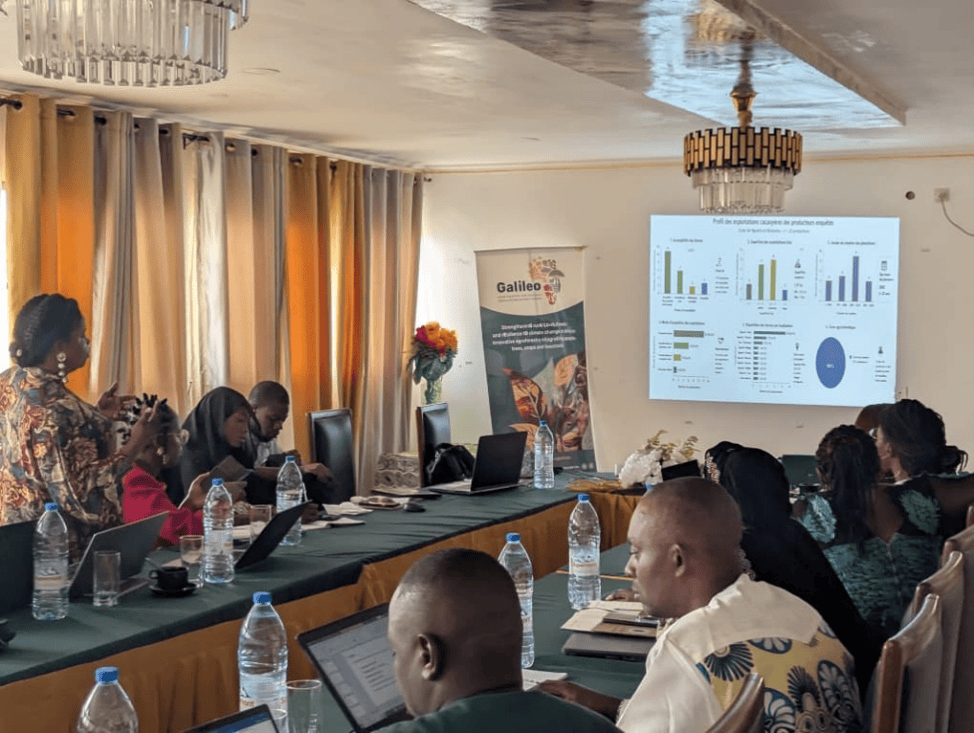
The GALILEO team and engaged stakeholders from the Cameroon Living Labs met to review progress in implementing the project’s agroforestry Farmer Field Schools.
Created by GALILEO, these practical learning groups support farmers in learning by doing, testing improved farming practices and sharing their experiences and local knowledge. They provide an important space for farmers and project partners to jointly assess what works best under local conditions.
The meeting reviewed field activities, selected plots, farming practices, available farm resources and the main challenges faced during implementation. Participants also discussed lessons learned and identified practical recommendations to improve farm management, productivity and sustainability, as well as key coordination priorities for the next GALILEO activities in Cameroon.
GALILEO publications
Carbon dynamics in Sahelian agroforestry
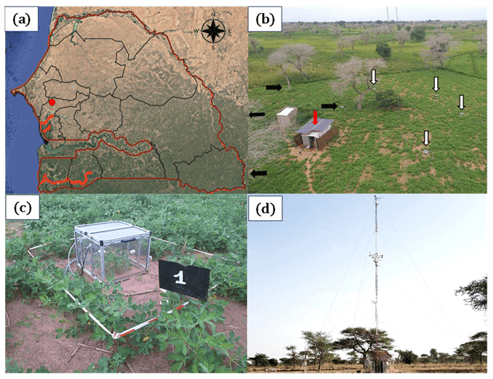
The publication “Drivers and vertical CO₂ flux balances in a Sahelian agroforestry system: insights from high frequency measurements”, co authored by GALILEO Coordinator Olivier Roupsard, examines carbon exchange in a Faidherbia albida agroforestry system in Senegal.
The results show that soil moisture and vegetation growth strongly influence carbon flows. Areas beneath tree canopies displayed greater biological activity, while Faidherbia albida trees contributed approximately 23% of the ecosystem’s annual carbon uptake. Overall, the system acted as a carbon sink, highlighting the potential of agroforestry to support climate mitigation and resilient land management across the Sahel.
Greenhouse gas fluxes in a Sahelian savanna
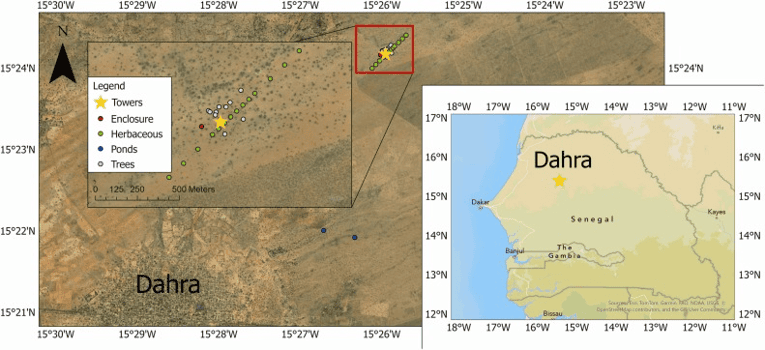
The publication “Contrasting roles of ground, trees, ponds and grazing in carbon dioxide, methane and nitrous oxide fluxes of an African semi arid savanna”, with GALILEO Coordinator Olivier Roupsard among its authors, examines greenhouse gas exchanges across soils, trees and seasonal ponds in Senegal.
The results show that the ground absorbed carbon dioxide during the rainy season and methane throughout the year, while seasonal ponds were major methane and nitrous oxide emission hotspots. Trees and grazing also affected greenhouse gas exchanges, demonstrating the importance of considering all landscape components when assessing the climate impact of Sahelian ecosystems.
GALILEO research presented at international conferences
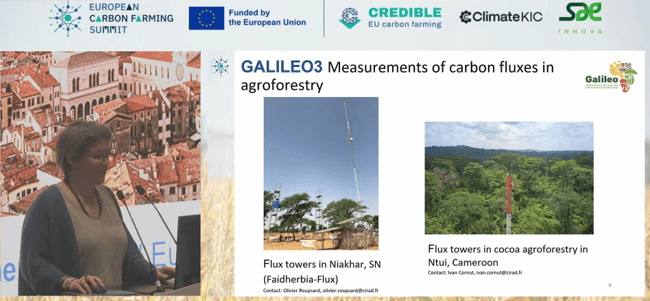
GALILEO partners participated in several major scientific events during the first half of 2026. At the European Carbon Farming Summit, held from 17 to 19 March in Padua, INRAE contributed to a joint session presenting results on agroforestry and carbon farming from the GALILEO, DigitAF, REFOREST and NEMESIS projects. The Summit brought together researchers, farmers, businesses and policymakers to advance credible and effective carbon farming practices.
At the CORDIALL Conference in Montpellier, GALILEO partners presented their work on digital innovation in agriculture. Contributions explored thermal drones and deep learning, smartphone supported livestock management, new methods for measuring sap flow and automated processing of environmental data. CORDIALL brought together the digital agriculture research community to present emerging technologies and their practical applications.
GALILEO partners also presented research on soil moisture monitoring and automated infiltration data at the EGU General Assembly 2026, one of Europe’s largest geoscience events. At the EURAF 2026 Conference, contributions focused on co creation in Ghana’s cocoa agroforestry Living Labs and the adaptation of the Hi sAFe model to represent Faidherbia albida systems. The conference explored agroforestry for food security, climate adaptation, biodiversity and ecosystem services.
Next Steps
GALILEO partners will focus on consolidating Living Lab activities and implementing agroforestry practices in selected pilot plots, coordinating country teams, equipment and field protocols for climate, soil and biodiversity monitoring, and addressing operational challenges identified across the Living Labs while strengthening knowledge exchange between countries.